
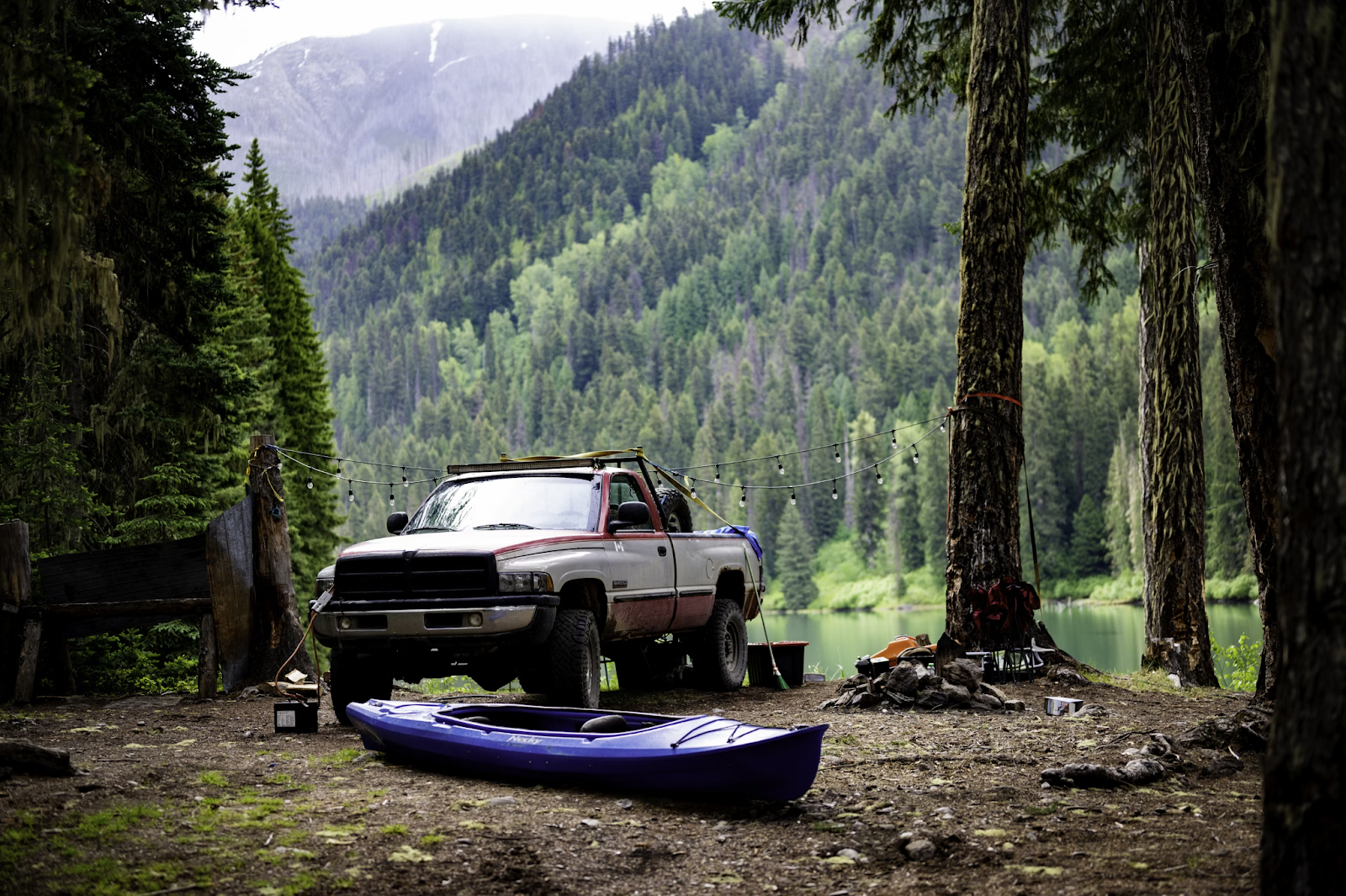
Photo by Kyle McLeod from Unsplash
Remote camping pulls you away from the noise. It’s where roads disappear and silence takes over. But without the right truck, that silence can turn into stress fast. You need something built to handle rough ground, heavy loads, and long distances with no gas stations, signal, or backup in sight.
Every choice in a truck build matters. From the tires to the storage setup, each component should serve a clear purpose. You’re not building for looks. You’re building for survival, comfort, and reliability when there’s no one around to call. That’s what separates a weekend vehicle from one that’s ready for the wild.
Table of Contents
- Powertrain and Drivetrain: Built for the Long Haul
- Trail-Ready Exterior Mods and Functionality
- Ground Clearance and Suspension: Ready for Uneven Terrain
- Smart Storage Solutions for Sustained Trips
- Electrical Systems and Power Management
- Tires and Traction for Remote Terrain
- Water, Fuel, and Recovery Gear: Essentials for Self-Reliance
- Communication and Navigation Tools
- Wrapping Up
Powertrain and Drivetrain: Built for the Long Haul
Remote camping takes you beyond the reach of ordinary roads. That’s why the engine and drivetrain deserve serious attention. A strong powertrain delivers the torque needed to pull gear through mud, gravel, and steep inclines without strain. Trucks with low-range gearing and four-wheel drive open access to areas where two-wheel setups can’t go.
Reliability matters more than horsepower. Your camping-ready truck needs an engine that starts every time, even in cold mornings or after days off-grid. A durable transmission and locking differentials add confidence when conditions change fast.
It’s not about power either. Efficiency counts. The farther you go, the more fuel matters. A setup that balances strength and range gives you freedom to explore without worrying where the next fill-up is. Remote doesn’t mean reckless. It means prepared.
Trail-Ready Exterior Mods and Functionality
Looks can be deceiving, but in the wild, they often serve a purpose. Exterior upgrades like steel bumpers, roof racks, and rock sliders offer more than appearance. They provide real protection on the trail. Skid plates shield your undercarriage from sharp rocks. A snorkel protects your engine during water crossings.
Front-end protection also matters. A high-clearance grille improves airflow and makes room for lighting or winch setups. Options like High Country Off-road provide durable aftermarket grilles that combine utility with a clean design suited for remote travel.
Every mod should earn its place. Lights for night setups, mounts for recovery tools, and racks for rooftop tents all support safer, longer trips. A well-equipped exterior adds capability when terrain gets tough and backup isn’t nearby.
Ground Clearance and Suspension: Ready for Uneven Terrain
Remote trails rarely offer smooth rides. Rocks, ruts, dips, and sudden drops can do real damage if your truck isn’t ready. That’s where ground clearance and suspension come in. Extra clearance helps you avoid getting stuck or scraping essential components. It also gives you more confidence to take on rough tracks without hesitation.
A solid suspension system does more than cushion the ride. It protects your cargo and prevents wear on your truck’s frame. Upgraded shocks, springs, and control arms allow you to handle bumps, angles, and unpredictable surfaces with control and comfort.
You’re not driving over asphalt. You’re climbing trails, crossing streams, and parking on uneven ground. With the right setup underneath, your truck becomes part of the adventure, not something holding you back.
Smart Storage Solutions for Sustained Trips
Remote camping cuts off your access to supplies. Your truck becomes your storage, shelter, and support. Every corner must serve a clear purpose.
Drawer systems organize tools, food, and equipment in the bed. Bed racks hold fuel, water, or larger gear without crowding the interior. Inside the cab, under-seat compartments and seat-back organizers help you keep smaller essentials sorted.
Quick access reduces stress. When conditions change, you should be able to reach what you need without digging through piles. A well-organized setup keeps your focus on the journey, not on finding your flashlight in the dark.
Electrical Systems and Power Management
Remote trips require power you can rely on. Lights, communication tools, fridges, and water pumps won’t run themselves. A solid electrical setup turns your truck into a functional basecamp.
Dual battery systems are a smart choice. One battery powers the truck, the other supports your gear. That separation prevents dead starts after a long night of charging devices. Many campers also add solar panels to extend trips without depending on fuel.
Power inverters make it easy to use standard devices on the trail. Simple access to charging keeps cameras, phones, and tools working when you need them most. A good power system makes every part of camp life easier. It’s quiet, reliable, and built to last beyond the first weekend.
Tires and Traction for Remote Terrain
Your tires are the only part of the truck that touches the ground. They carry the weight, absorb impact, and decide how far you can go. For remote camping, basic all-season tires won’t hold up.
All-terrain or mud-terrain tires offer deeper treads and stronger sidewalls. They grip uneven surfaces, resist punctures, and perform well in sand, gravel, or mud. The right set gives you control where standard options would slip or fail.
Always bring a full-size spare. A patch kit and portable inflator can make the difference between a quick fix and a long delay. Traction matters at every turn. With proper tires and gear, you travel with more confidence, even when the trail throws surprises your way.
Water, Fuel, and Recovery Gear: Essentials for Self-Reliance
Remote camping means you handle every challenge on your own. That includes staying hydrated, fueled, and prepared for recovery. A reliable setup covers these needs without adding bulk or confusion.
Extra fuel storage extends your range when gas stations disappear from the map. Water tanks or stackable containers keep drinking and cleaning supplies ready. Both are critical for safety and comfort when you’re days away from the nearest town.
Recovery tools matter too. A winch, traction boards, shovel, and jack help you stay mobile when conditions turn rough. These aren’t backup plans. They’re essential parts of your build. Being self-reliant lets you explore without second-guessing every mile. When you’re far from help, your gear becomes your safety net.
When the cell signal disappears, your trip depends on the tools you bring. Maps and phones won’t help if they stop working. That’s why serious campers rely on gear built for remote use.
A dedicated GPS unit tracks your route without needing reception. Satellite messengers can send location updates or emergency alerts from anywhere. HAM radios give you a way to reach others if things go wrong and you need help fast.
These tools don’t replace preparation. Rather, they support it. You still need to plan your route, know your surroundings, and watch the weather. But with the right equipment, you reduce the risk of getting lost or stuck without contact. Connection gives you peace of mind and a safer trip, even when you’re completely off the grid.
Wrapping Up
An ideal truck build for remote camping adventures doesn’t happen by accident. It’s the result of choices made with purpose, each one supporting independence and safety off the grid. Build with conditions in mind, not trends. Focus on what keeps you moving, sheltered, and prepared when the road disappears. In places where isolation is the reward, your truck becomes the one thing you can count on. Make every feature earn its place.


